
The Florida Insurance Crisis Is Scaring Buyers Away From Homes They Can Actually Afford
The Honest Insurance Breakdown
The Florida Insurance Crisis Is Scaring Buyers Away From Homes They Can Actually Afford
Most agents skip this conversation because it can kill a deal. Here are the real premium ranges for Poinciana, Kissimmee, Davenport, and Windermere — and which homes get hit the hardest.
Bernard Jackson Jr., ABR · REALTOR, LPT Realty · Central Florida
Quick answer
Osceola County (Poinciana, Kissimmee): roughly $3,000–$4,000/year for a newer roof, $350,000 in dwelling coverage. Add $1,500–$4,000/year if the roof is past 15 years old.
Polk County (Davenport): roughly $3,000–$3,700/year under the same conditions.
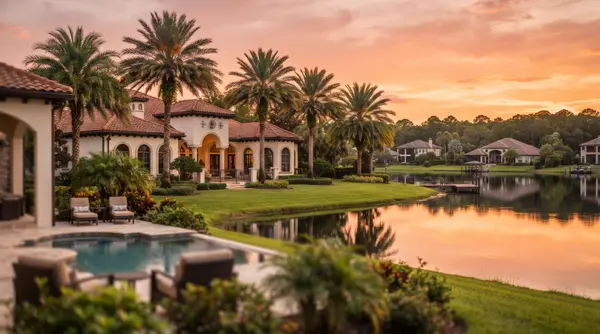
Orange County (Windermere): roughly $3,300–$4,000/year on a standard home; luxury and lakefront Windermere properties often run $7,000–$12,000+/year.
A roof past 15 years old is the single biggest number-changer in this entire article. More on that below.
A buyer I worked with found a $270,000 house in Poinciana. Good bones, good lot, payment fit her budget on paper. Then the insurance quote came back at $410 a month. That's not a rounding error — that's an extra car payment stacked on top of her mortgage, and nobody told her about it until she was already three weeks into the deal.
That happens constantly in Central Florida right now, and most agents let it happen. Insurance is the line item that gets glossed over because talking about it honestly can talk a buyer out of a house — and that costs the agent a commission. I'd rather lose the showing than watch you lose the closing over a number I could have told you up front.
So here it is. Real premium ranges for the areas I work — Poinciana, Kissimmee, Davenport, and Windermere — plus which homes get hit hardest and what you can do about it before you write an offer.
The Math Nobody Runs Before You Fall in Love With a House
When you shop for a home, you focus on the price and the interest rate. That makes sense — those are the numbers on the listing. But in Florida, homeowners insurance has become the third major cost on top of principal and interest, right behind property taxes, and it doesn't move with the list price. It moves with your county, your roof, and your home's construction.
Statewide in 2026, a typical Florida homeowners policy runs somewhere between $5,500 and $11,000 a year, depending on where you are and what your roof looks like. That's the state average across coastal and inland markets combined. The good news: Central Florida's inland counties, including Osceola, Polk, and Orange, sit well below that number because we're not fighting direct hurricane landfall and storm surge the way South Florida and the Gulf Coast are.
"Below average for Florida" still isn't cheap, and one factor can add thousands of dollars a year to a home that looked affordable on the listing.
What Insurance Actually Costs in Your Area (2026)
These are baseline averages for a standard single-family home with roughly $350,000 in dwelling coverage, a roof under 15 years old, and no prior claims. Your actual quote depends on your specific home, but this is your realistic starting point.
Osceola County — Poinciana & Kissimmee
~$3,000–$4,000 / year
Around $250–$330 a month. Osceola sits in the moderate-risk tier for Florida — no coastline, no storm surge, but still fully exposed to hurricane wind and rain.
Polk County — Davenport
~$3,000–$3,700 / year
Around $250–$310 a month. One of the more affordable counties to insure in the state, but new-construction communities and older resale homes can land at opposite ends of that range.
Orange County — Windermere
~$3,300–$4,000 / year
Standard homes run moderate. But Windermere's lakefront and luxury homes, insured at $1–2 million in dwelling coverage, commonly run $7,000–$12,000+ a year.
Notice what's missing from those numbers: your list price. A $260,000 home and a $340,000 home in the same neighborhood, with the same roof age and the same construction, can insure for close to the same premium. What actually moves the number is the stuff underwriters care about — and that's where most agents stop the conversation.
The Roof Age Trap That's Wrecking "Affordable" Deals
Here's the number that matters more than your list price: how old is the roof. Florida Statute 627.7011 gives you some protection — an insurer can't deny coverage just because a roof is under 15 years old. But once a roof crosses that 15-year line, everything changes.
Under 15 years
Full replacement cost coverage. Widest carrier availability. Standard pricing.
15–20 years
Most carriers require an inspection and often shift the roof to actual cash value coverage instead of full replacement. Premiums commonly rise $1,500–$4,000/year.
20+ years
Many private carriers won't write a new policy at all. Citizens Property Insurance may be your only option, and a 4-point inspection is usually required just to get a quote.
Actual cash value versus replacement cost isn't a technicality. Replacement cost pays what it actually costs to put a new roof on your house. Actual cash value pays what your old, depreciated roof was worth right before the storm — which on a 17-year-old roof might be a fraction of the replacement cost. If a storm takes your roof, that's the difference between a manageable repair bill and a five-figure check you write yourself.
A lot of the "affordable" inventory in Poinciana and Kissimmee was built in the late 1990s through the mid-2000s. That means plenty of original roofs are sitting at 20 to 28 years old right now. That's not a red flag that should kill a deal — it's a number that has to be in your budget conversation before you write an offer, not after your lender orders the insurance quote.
Which Homes Get Hit Hardest
Before you tour a home you're serious about, or definitely before you write an offer, check for these. Any one of them can change your insurance number by hundreds or thousands of dollars a year.
Roof past 15 years old — the biggest single factor, covered above.
Original single-pane windows in a home without shutters — no opening protection credit means you're paying full price for that risk.
Older electrical panels or aluminum wiring — common in homes built before the early 1980s, and a standard flag on any 4-point inspection.
Aging plumbing — polybutylene or galvanized pipe can trigger insurer pushback or outright decline, independent of the roof.
Gable roof with no hurricane straps — a gable roof (the triangular end walls you see on a lot of Central Florida homes) is more wind-vulnerable than a hip roof, and a wind mitigation inspection will show it.
Prior claims history — in Florida, claims history follows the property, not just the owner. A home with two or three prior claims can be harder and more expensive to insure, no matter who's buying it.
Want your real number before you write an offer?
Send me the address and I'll walk you through what to expect on insurance before you're emotionally attached and three weeks into a contract.
Call or Text 863.223.2294 Email BernardCitizens Insurance and the Market Shift — What It Actually Means for You
Citizens Property Insurance is Florida's state-backed insurer of last resort — it exists for homes the private market won't touch. At its peak, Citizens covered around 1.4 million policies statewide. That number has been dropping as private carriers come back into the market, which is genuinely good news for buyers.
Here's something worth knowing: several carriers filed for rate decreases heading into 2026, not just increases. Heritage Property and Casualty, for example, filed to lower Osceola County premiums by 7% for 2026. State Farm filed for a 10% statewide reduction. That doesn't mean insurance is suddenly cheap — it means the market is stabilizing after a rough few years, and shopping around actually matters again.
If Citizens sends you a "takeout" offer — a private carrier willing to assume your policy — and that offer comes in within 20% of your current Citizens rate, you're automatically moved to that carrier unless you opt out. It sounds like fine print, but it's one of the main ways homeowners are quietly moving from Citizens back to the private market right now.
How to Protect Your Offer Before You're Under Contract
This is the part that actually changes your outcome. Most of this takes one phone call and a few days — not a renegotiated contract after the fact.
Get an insurance quote before you write the offer — not after. A quick call to an independent agent with the address, roof age, and square footage gets you a real range in a day or two.
Ask for the roof's install date and permit history up front. Sellers and listing agents have this. If it's not on the listing, I'll go get it before we write.
Request the wind mitigation inspection, or get one. It typically costs $75–$200 and can unlock credits worth hundreds a year — or tell you exactly what you're walking into.
Order a 4-point inspection on anything built before roughly 2010. Roof, electrical, plumbing, and HVAC — the four systems insurers actually underwrite against.
Build your real payment on principal, interest, taxes, AND insurance — not just P&I. That's the number your lender uses for your debt-to-income ratio, and it's the number that decides what you can actually afford.
Bottom Line
Florida's insurance market is genuinely improving in 2026 — rates are stabilizing, carriers are coming back, and Citizens' policy count keeps shrinking. That's real, and it matters. But "improving" doesn't mean "small," and a home that looks affordable on the listing price can turn into a budget problem the moment the insurance quote lands, especially if the roof is past 15 years old.
I'm telling you this because it's my job as your buyer's agent, not the seller's agent, to make sure you know the full cost of the house before you're emotionally invested and financially committed. That's what the ABR designation next to my name is supposed to mean.
I'll pull the roof age, check the flood zone, and get you a realistic insurance range on any property you're considering — before you write an offer, not after.
Call or Text 863.223.2294or visit bernardsellsflhomes.com
Frequently Asked Questions
How much is homeowners insurance in Poinciana or Kissimmee, FL?
In 2026, a standard home in Osceola County with a newer roof and no prior claims runs roughly $3,000 to $4,000 a year for $350,000 in dwelling coverage. Homes with roofs older than 15 years often run $1,500 to $4,000 higher.
How much is homeowners insurance in Davenport, FL?
Polk County, which covers Davenport, averages roughly $3,000 to $3,700 a year for a newer-roof home with $350,000 in dwelling coverage. Older roofs and homes without wind mitigation credits push that range higher.
How much is homeowners insurance in Windermere, FL?
Orange County averages roughly $3,300 to $4,000 a year for a standard home. Windermere's larger lakefront and luxury homes commonly run $7,000 to $12,000 or more a year once dwelling coverage rises into the $1–2 million range.
Does roof age affect Florida homeowners insurance?
Yes. Insurers can't deny coverage solely because a roof is under 15 years old. Past 15 years, insurers can require an inspection, often shift coverage from replacement cost to actual cash value, and many stop writing new policies past 15–20 years.
Can I still get insurance with an older roof in Florida?
Often yes, through a wind mitigation and roof condition inspection showing at least five years of remaining useful life, or through Citizens Property Insurance as a last resort. Expect a higher premium, and possibly actual cash value coverage instead of full replacement.
Bernard Jackson Jr., ABR
REALTOR with LPT Realty, serving Poinciana, Kissimmee, Davenport, St. Cloud, and Windermere. Bilingual, English and Spanish. FL License #SL3324846.
"Educated today. Prepared tomorrow. Homeowner forever."
Premium ranges are 2026 estimates based on published carrier rate filings and industry rate data for standard dwelling coverage. Actual quotes vary by property, carrier, claims history, and coverage selections — always confirm with a licensed Florida insurance agent before writing an offer.
Educated today. Prepared tomorrow. Homeowner forever.
Bernard Jackson Jr., REALTOR® (ABR®) · LPT Realty
Categories
- All Blogs (217)
- #FearlessFriday (10)
- #MotivationalMonday (14)
- #solutionsaturday (6)
- #SoulfulSunday (7)
- #TechnologyThursday (10)
- #WellnessWednesday (14)
- 10 Steps To Know About Buying A Home In Poinciana (1)
- 10 Things To Know About Davenport (1)
- 10 Things To Know About Poinciana (2)
- 5 New Things For Poinciana For 2025 (1)
- Annual Events and Festivals in Kissimmee, Fl (2)
- Benefits of Living in Poinciana (2)
- Benefits of Selling to a Cash Buyer (1)
- Buyers (81)
- City Guides Kissimmee (16)
- CITY GUIDES: Poinciana Real Estate News & Resources (8)
- CITY STATISTICS: Davenport Real Estate News & Resources (1)
- City Statistics: Kissimmee (2)
- CITY STATISTICS: Lake Wales Real Estate News & Resources (1)
- Kissimmee Homes For Rent (5)
- Kissimmee Homes For Sale (9)
- Pros and Cons of Living in Kissimmee, FL (1)
- Renters (37)
- Retirement In Poinciana, FL (1)
- Sellers (20)
- Things To Do In Poinciana (2)
- Things To Do Near Kissimmee, FL (2)
- Things To Do NYE 2025 In Orlando and Kissimmee, FL (1)
- Truth About 20 Percent Down (1)
- What Are The Benefits of Living In Kissimmee (1)
- Your Dream House (2)
Recent Posts






GET MORE INFORMATION